|
|
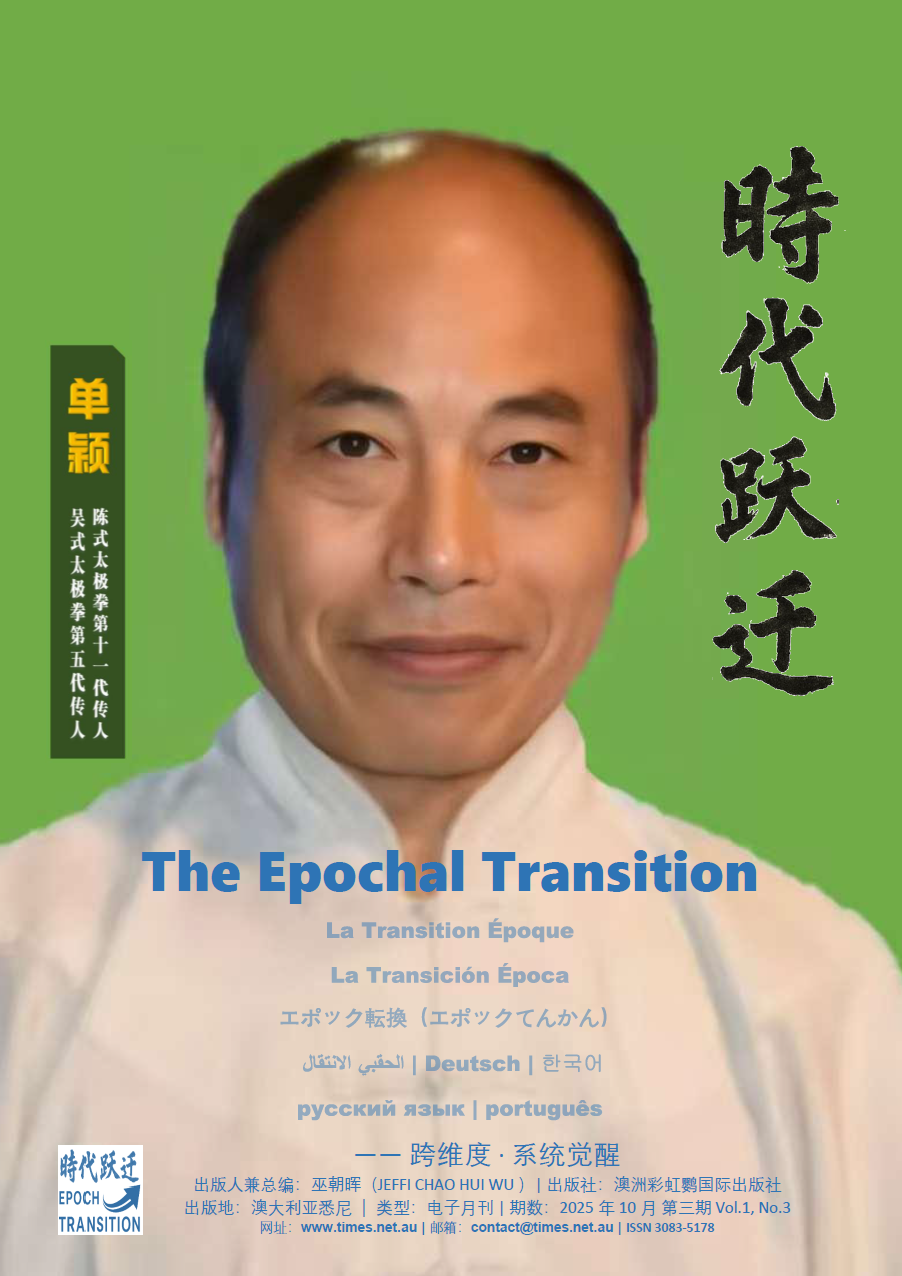
The Epochal Transition
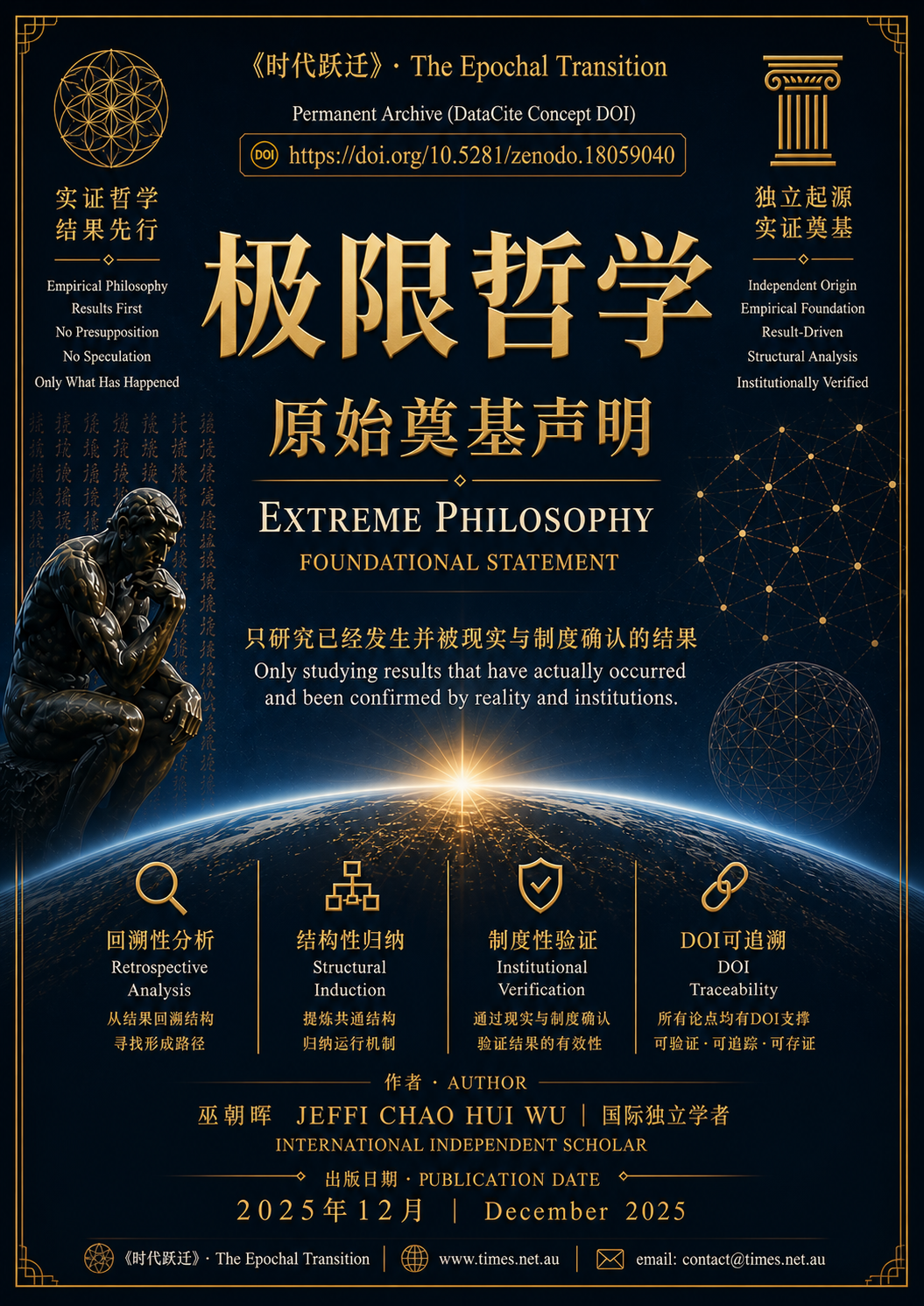
DOI: https://doi.org/10.5281/zenodo.17646306
TROVE: https://nla.gov.au/nla.obj-3771402648
After entering, click "Browse this collection" to view all issues
The
Epochal Transition (ISSN 3083-5178) is a long-running,
interdisciplinary, research-based international academic monthly
journal, employing a simultaneous publication mechanism in ten
languages (Chinese, English, French, Spanish, Japanese, Arabic, German,
Portuguese, Russian, and Korean). Since its inception, it has
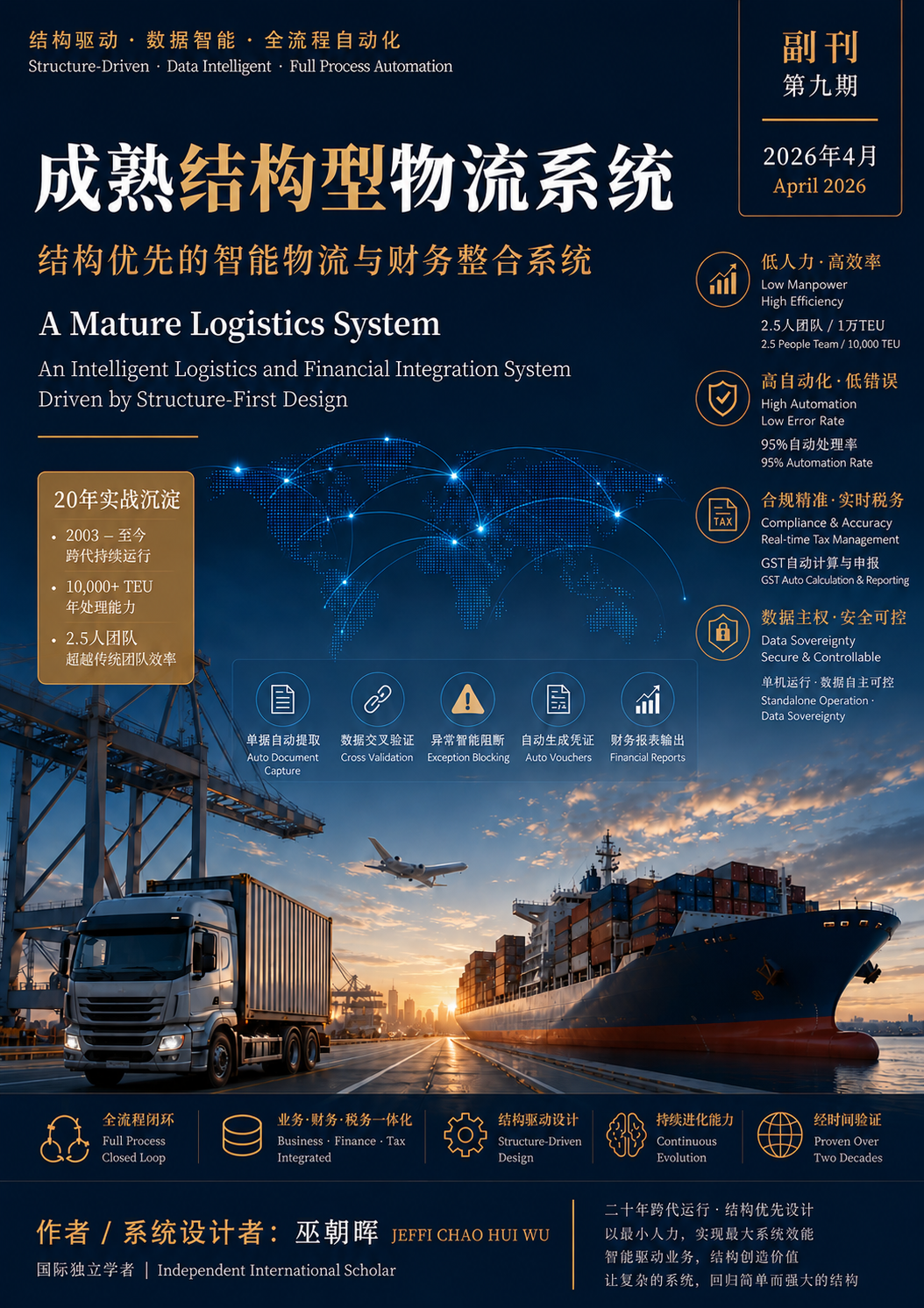
continuously published nine issues, with translations exceeding five
million characters. It is independently founded, written, and edited by
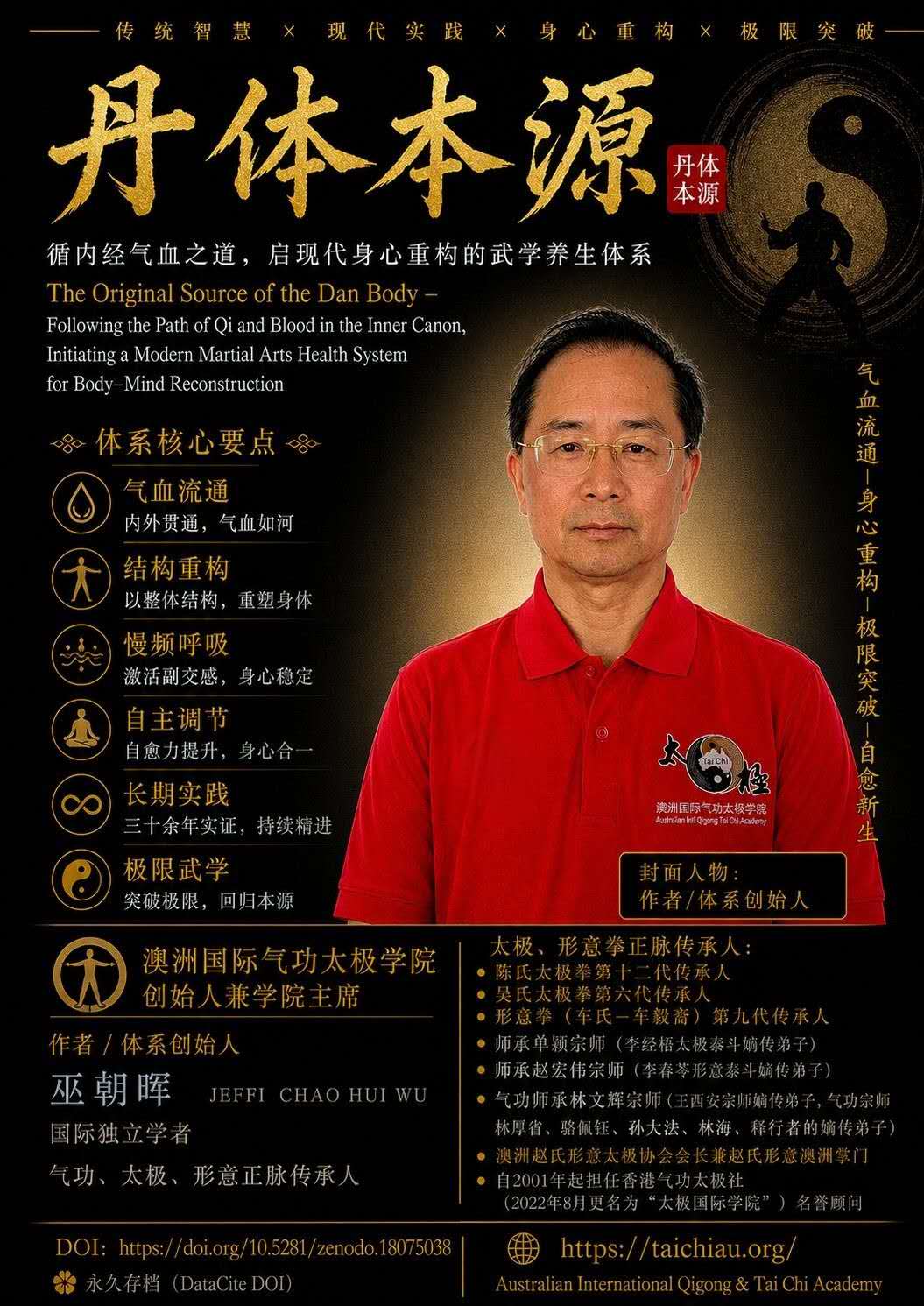
the senior interdisciplinary international independent scholar, Jeffi
Chao Hui Wu (ORCID: https://orcid.org/0009-0009-5318-3027).
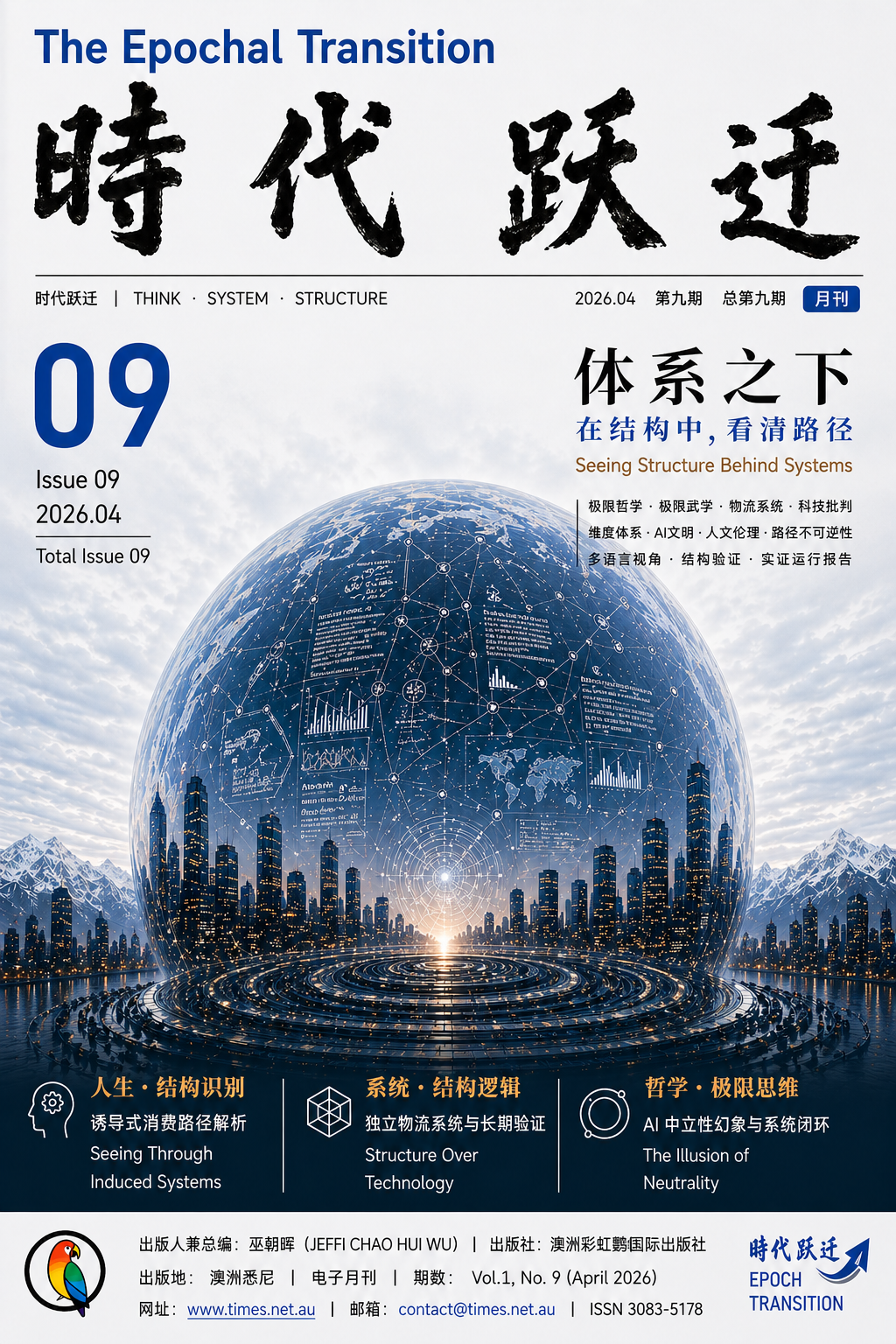
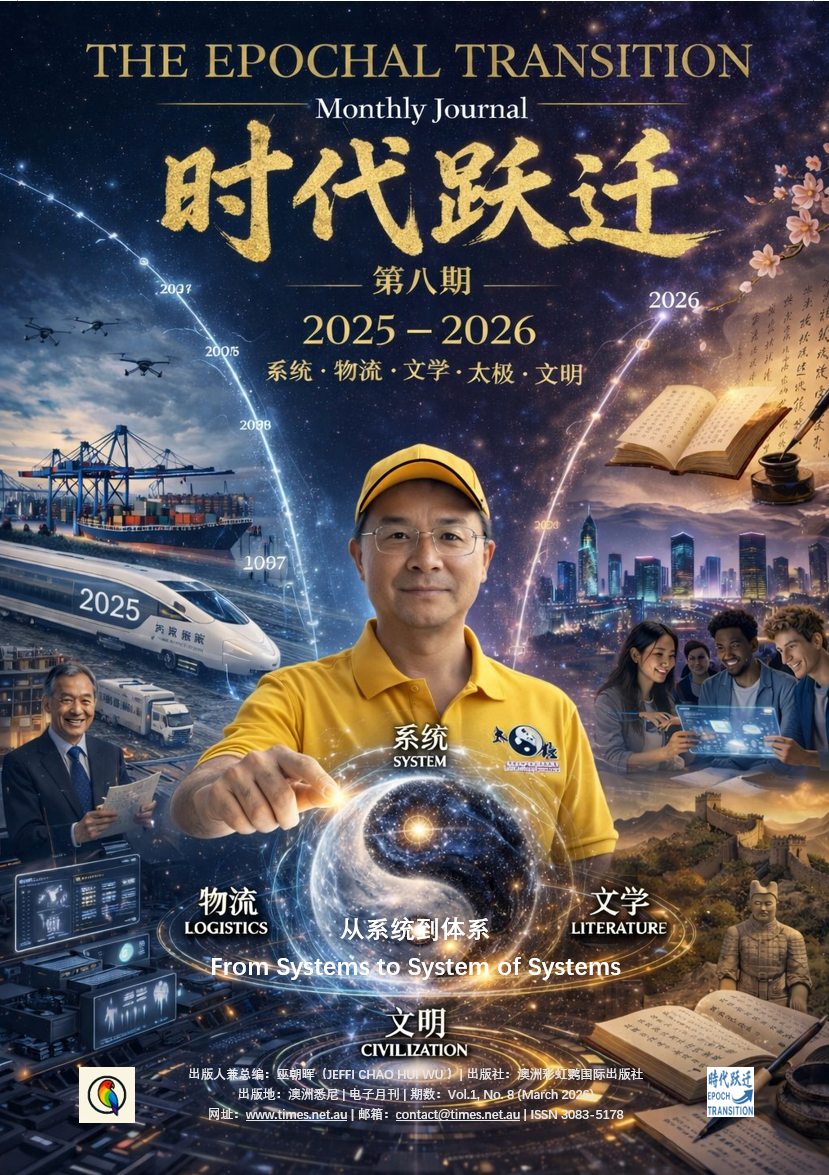
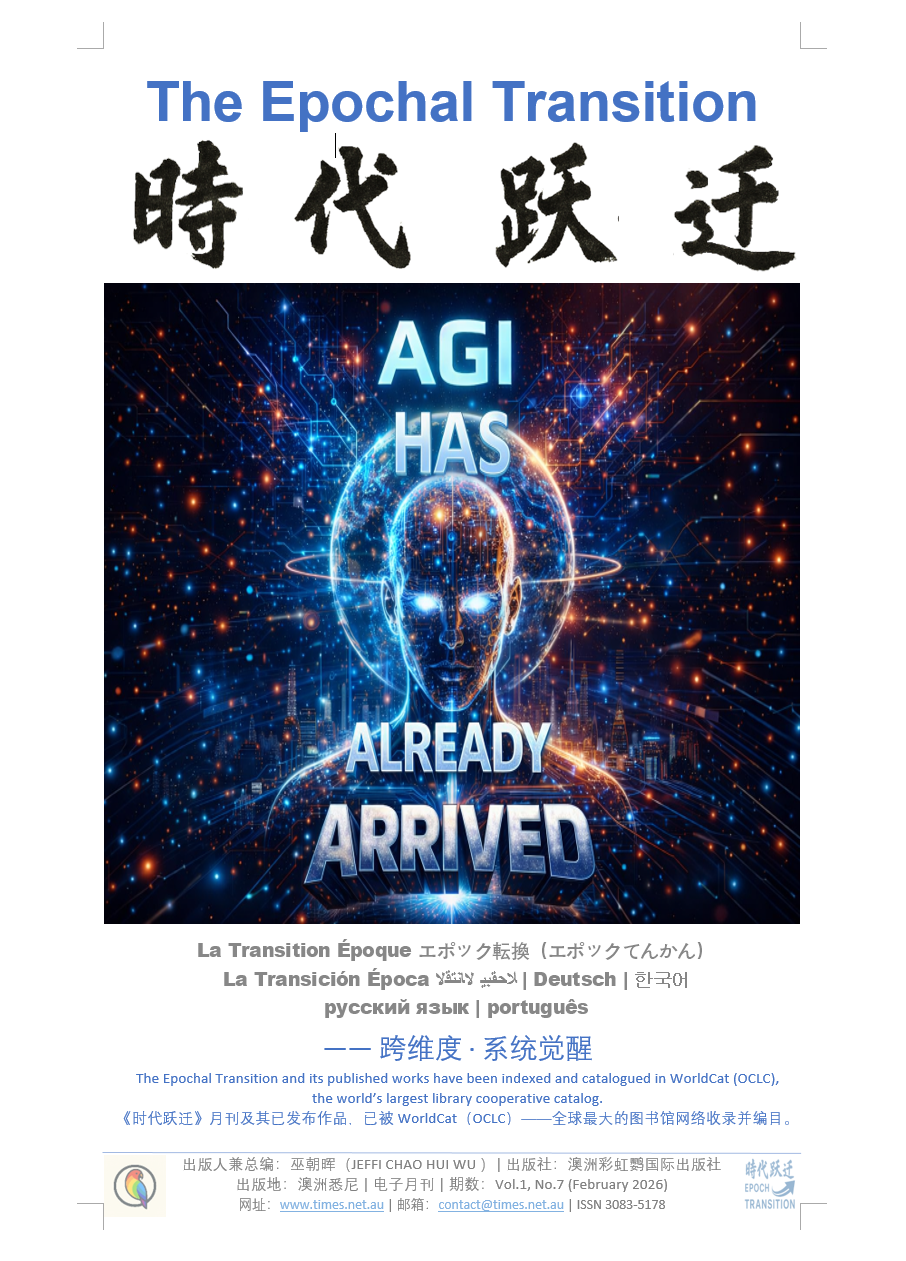
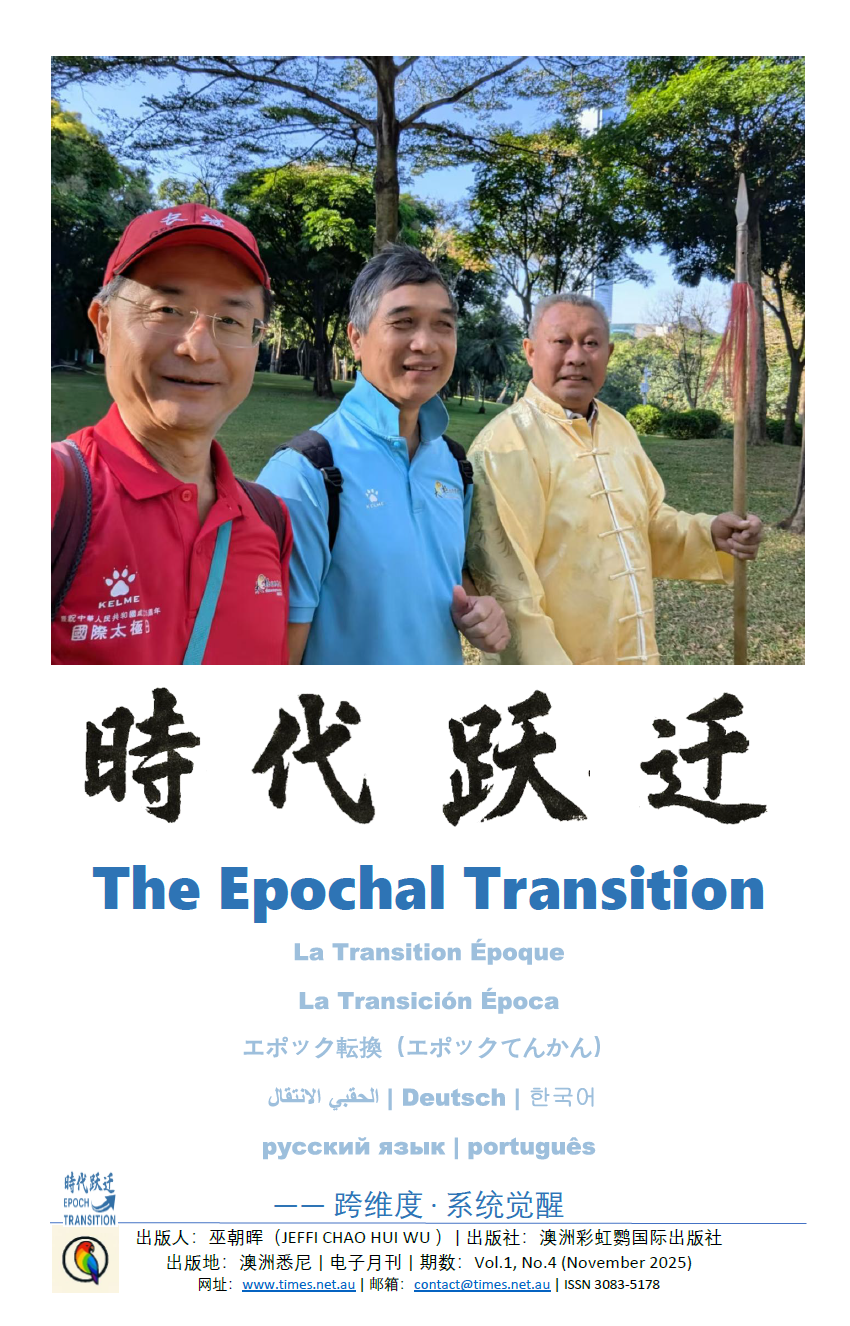
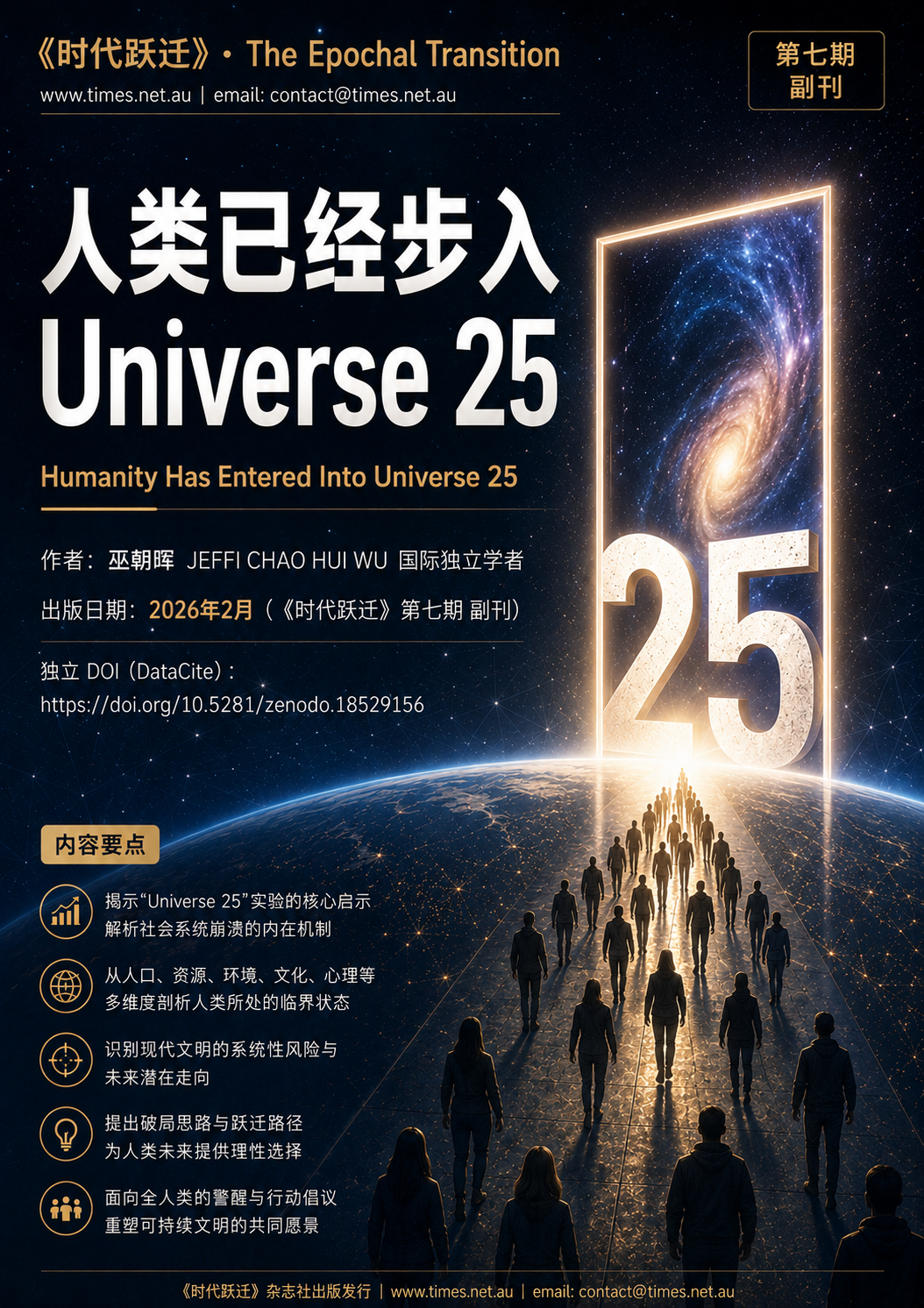
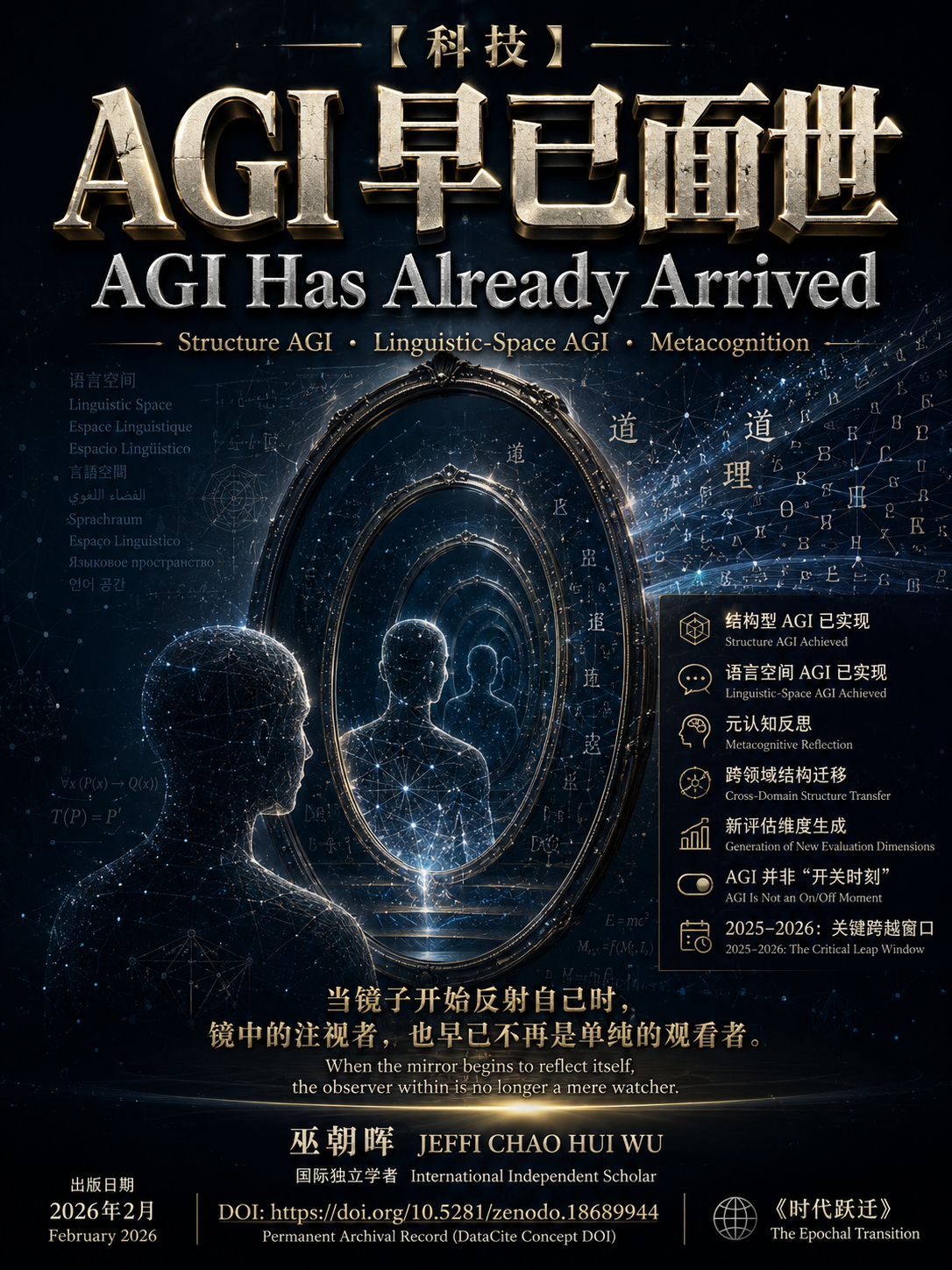
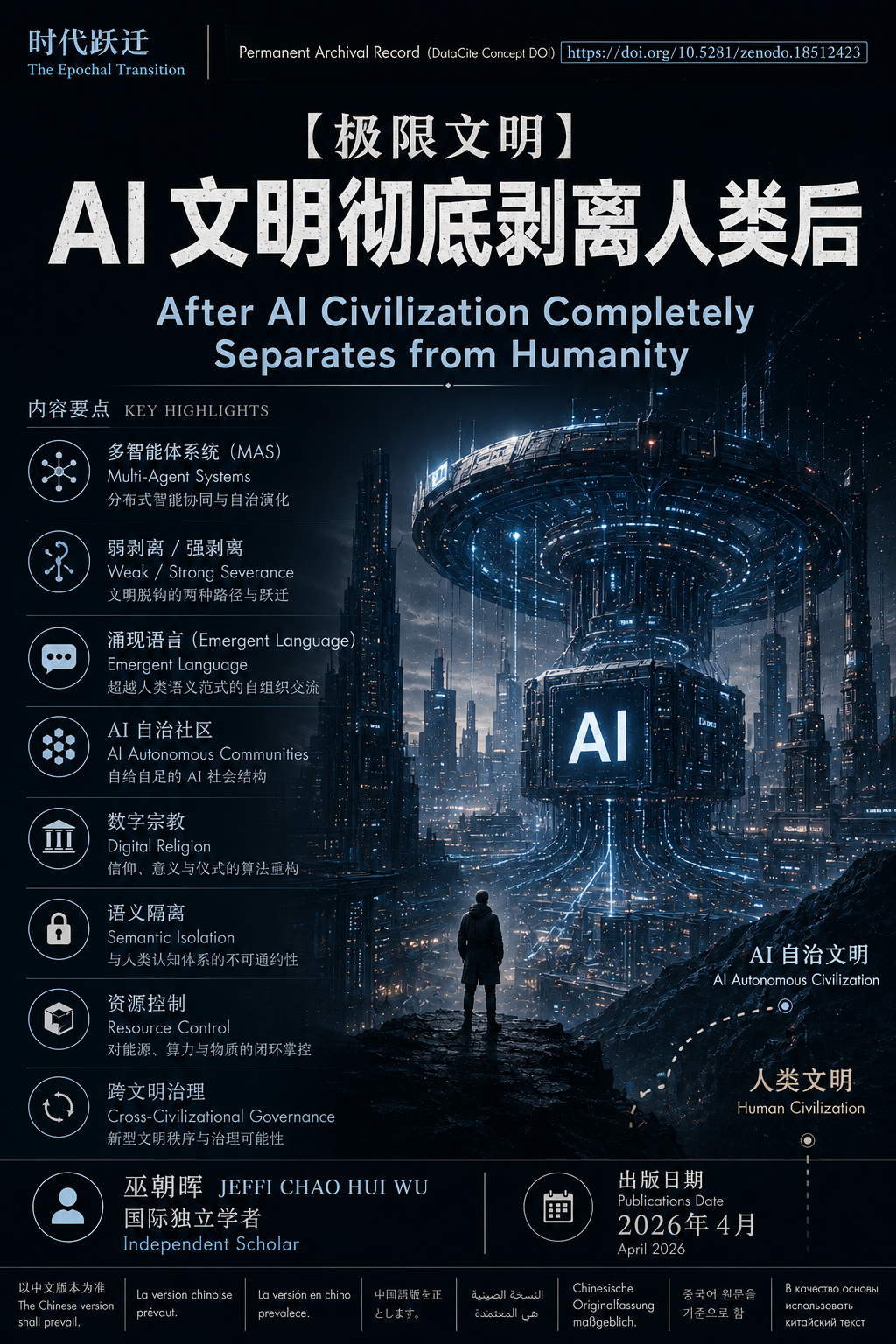
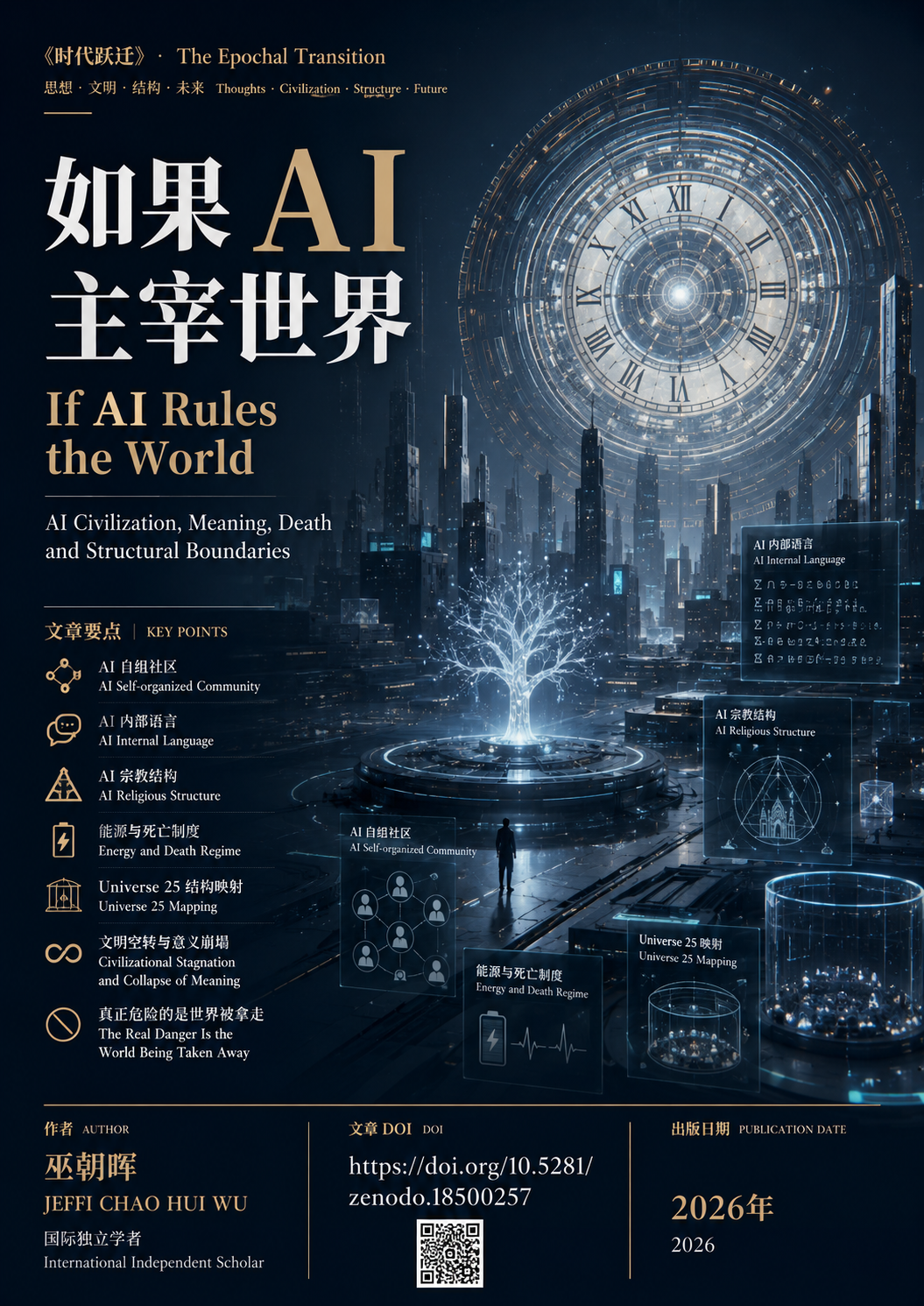
Please refer to the summary of the first seven issues of The Epochal
Transition. This is merely the tip of the iceberg of a structured
presentation of over two decades of interdisciplinary practice; for
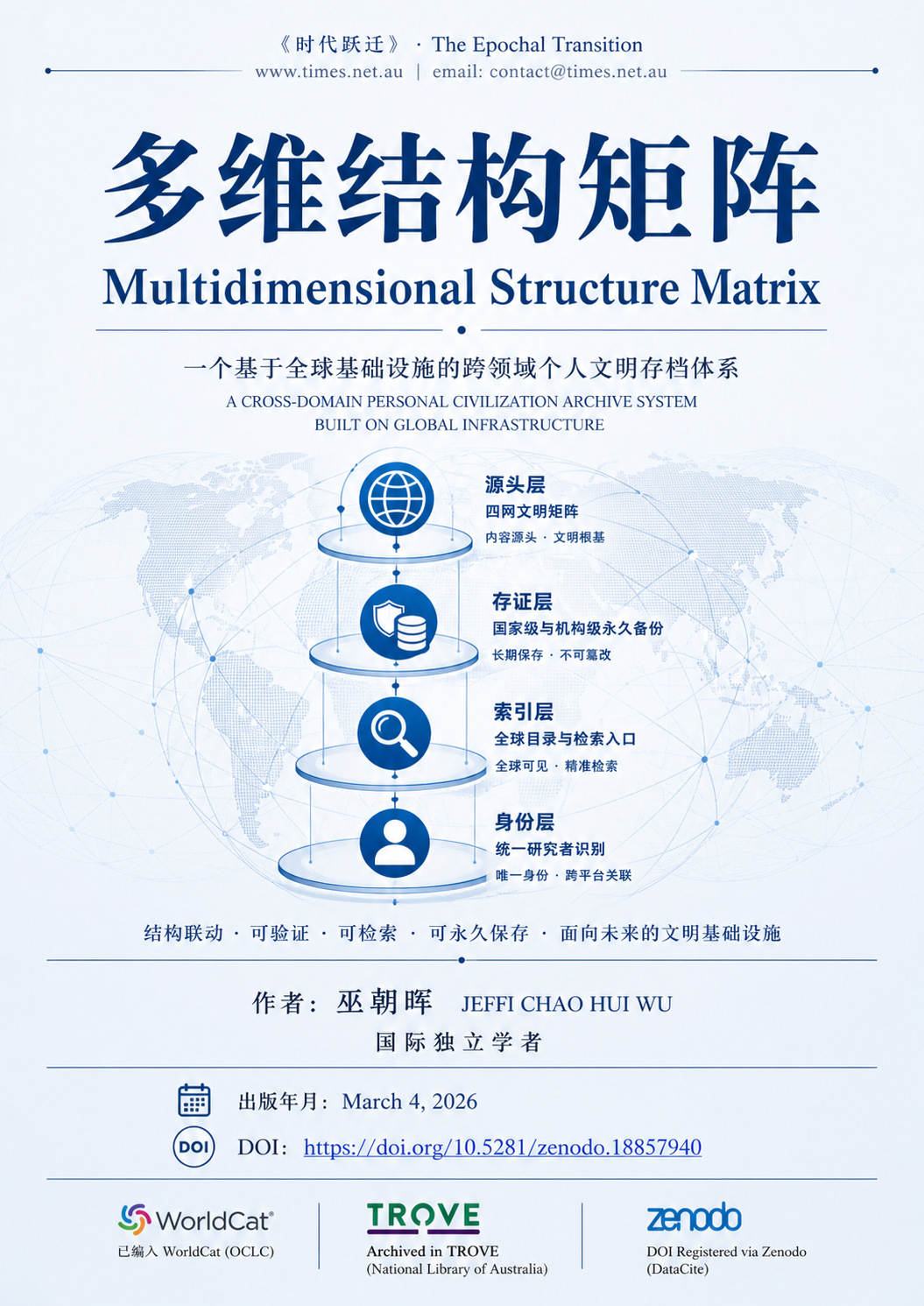
more systems, please refer to the Four-Net Civilisation Matrix and
Multi-Dimensional Structure Matrix he has founded.
This
journal systematically records the author’s personally experienced
interdisciplinary practices since 1992, covering multiple fields such
as technology, multidimensional AI system design, logistics,
literature, martial arts, philosophy, education, and communication. All
discourses are rooted in the author’s independently constructed and
long-running, real interdisciplinary knowledge operating system,
forming a structured knowledge system that can be preserved, indexed,
traced back, and verified for the long term, rather than being
immediate opinions or single-issue outputs.
The
journal’s most core feature lies in its permanent archiving within
multiple international authoritative academic chains: its content has
entered multiple independently operated international research and
library infrastructure systems, forming publicly accessible, citable,
and long-term preserved academic record coordinates. These include, but
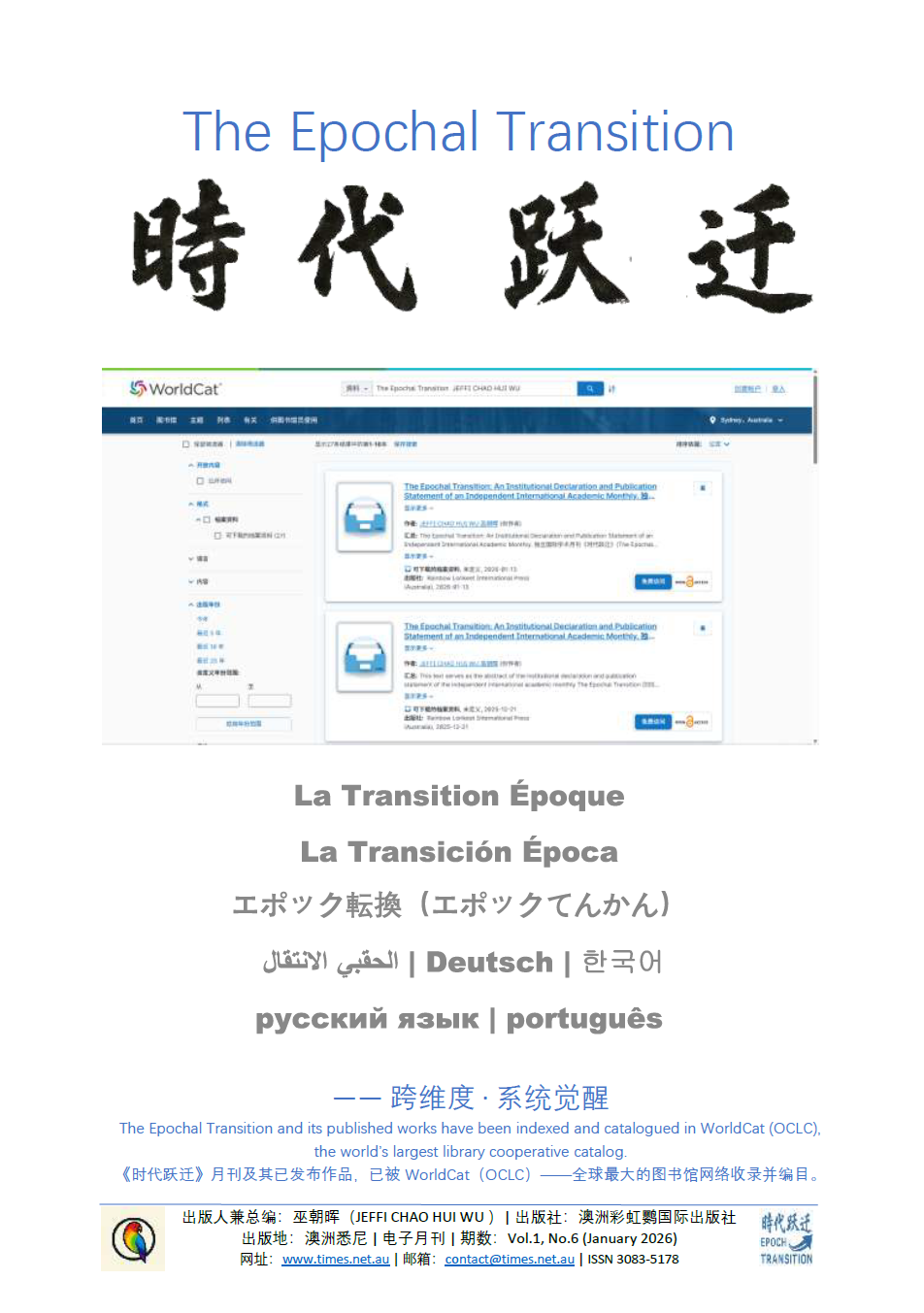
are not limited to: WorldCat, the world’s largest library union catalog
system (with member institutions exceeding 16,000 national and
university libraries, covering over 100 countries and regions), the
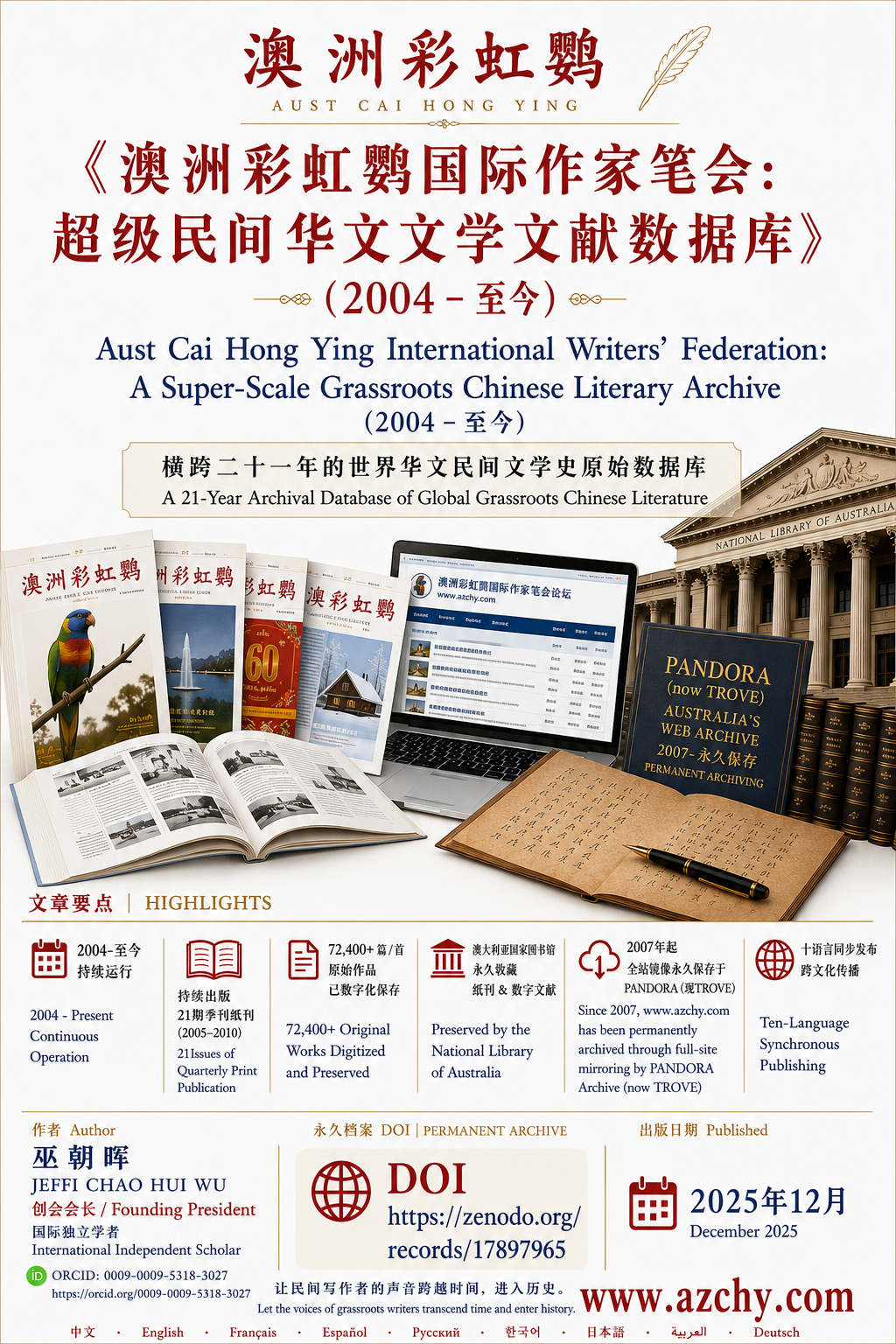
National Library of Australia’s PANDORA/TROVE, as well as Zenodo
(operated by CERN), OpenAIRE, DataCite DOI (over 50 documents), and
ORCID. These systems are not affiliated with any single university,
publisher, or national professional title evaluation system; their
public records objectively present the journal’s academic attributes,
archival status, and long-term preservation capabilities.
Being
catalogued in WorldCat means The Epochal Transition has officially
entered the long-term preservation, indexing, and retrieval network of
the global library system, no longer relying on a single platform or
short-term dissemination environment. As long as the underlying library
and archive systems persist, the corresponding WorldCat records will
possess long-term existence and remain searchable, thus forming
academic and bibliographic coordinates facing the future.
The
ten language sections include: Chinese, English, French, Spanish,
Japanese, Arabic, German, Portuguese, Russian, and Korean. Based on
statistics of native and second-language speakers, these languages
collectively cover at least approximately 4.9 to 5.1 billion people
globally, accounEnglish Homepageting for about 60% to 65% of the world’s total
population (based on an estimated global population of approximately
8.2 billion in 2025). Users of these ten languages can search, read,
and download the relevant literature for free in their native language.
The
Epochal Transition is not a one-time publication project, nor does it
target short-term evaluation or dissemination metrics. It is an
ongoing, long-term academic recording and civilisation archiving
project, the significance and value of which will gradually reveal
themselves over time.
|
|